
Laura Baines: Ambition, Concealment, and Reinvention
The Book of MirrorsLaura Baines’s development from an exceptionally driven psychology student into an influential scholar whose career and role in the past remain contested by conflicting accounts.
increasing Bearing strength in each event
 decreasing
Bearing strength in each eventdecreasingThe Exceptional Student
The Exceptional Student
A deliberate change of direction
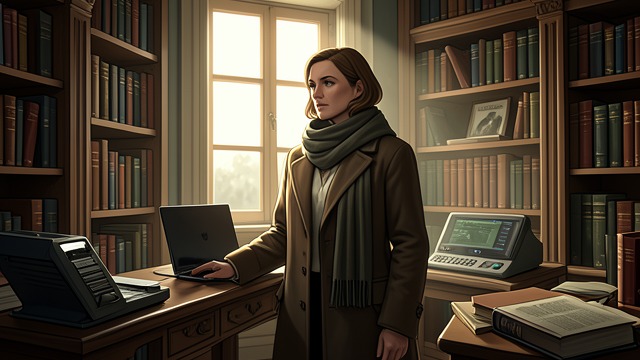
Laura Baines arrives at Princeton University in Princeton after earning a mathematics master’s degree and redirecting herself toward psychology. She has already distinguished herself in academic competitions, and she describes her new field as a way to understand how people think and behave.
Her confidence makes her socially vivid and difficult to ignore. She is witty, culturally engaged, and willing to challenge convention, while also revealing a powerful desire to prove herself through achievement.
A new intellectual allegiance
Laura becomes Joseph Wieder’s research assistant and helps with work concerning memory and human responses. Her mathematical training gives her a role in translating psychological questions into models, and she regards the collaboration as the beginning of a possible career.
That relationship gives her access to a celebrated professor and to research that may bring recognition. It also places her ambitions inside a structure of unequal authority, where her contribution and her standing depend partly on Wieder’s decisions.
Recognition and Attachment
Recognition and Attachment
Competing relationships
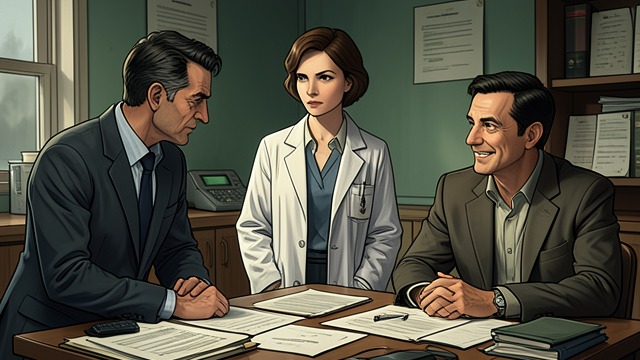
Laura maintains a complicated personal life, including her relationship with Timothy Sanders and her growing closeness to Richard Flynn. To Flynn, the intimacy becomes a defining love affair; Laura’s later account denies that they were ever lovers and describes his attachment as an obsession.
Her connection with Wieder is equally disputed. Some people see a special emotional or romantic bond, while Laura presents it as a professional relationship with a protective mentor whose attention made her feel exceptional.
A consequential introduction
Laura brings Flynn into Wieder’s circle, and the professor hires him to organize his library. The arrangement puts the three figures into repeated contact and gives Laura a way to keep her academic and personal worlds close together.
As the relationships tighten, their differing interpretations become consequential. Flynn sees intimacy and betrayal; Laura later describes his feelings as unwanted; and other witnesses assign her influence over both men a much more calculating purpose.
The Authorship Dispute
The Authorship Dispute
Credit at stake
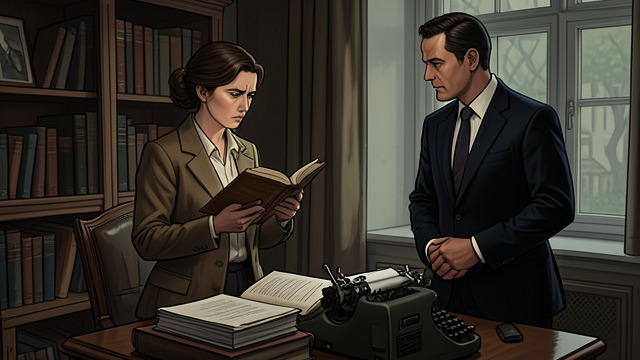
Sarah Harper later says Laura believed that her mathematical contribution to Wieder’s research entitled her to co-author credit. According to Harper, Laura discovered a book proposal that omitted her name and concluded that Wieder had claimed work built substantially on her ideas.
Laura’s own account is different. She says the book project was hers: she had given Wieder an outline and opening chapters, and he had incorporated that work into a proposal of his own. The surviving proposal and the close resemblance between its opening chapter and Laura’s first book support a dispute over authorship, but do not settle its full history.
A career-defining injury
For Laura, the alleged appropriation threatens more than credit on a single publication. It places at risk the recognition she seeks and the intellectual work she considers her own.
The disagreement becomes a possible motive in later interpretations of the murder. Yet the available accounts disagree about whether Laura planned retaliation, was protecting her work, or is being reconstructed by people who already suspect her.
Flight from the Scandal

Flight from the Scandal
Conflicting accounts of the night
Laura is connected to the murder night through incompatible testimony. Sarah Harper says Laura arrived at her home in the early morning, frightened and asking for an alibi; Laura later acknowledges that Harper lied but says she had been avoiding scandal, not concealing a role in the killing.
Laura also admits that she had an abortion that day and that Flynn arrived at her home after she returned. The pregnancy and the rumors about her relationship with Wieder made public exposure especially dangerous, while her account leaves important questions about her movements unanswered.
Disappearance into a new life
After the murder, Laura leaves Princeton and gradually disappears from Flynn’s account of the years that follow. She later changes her surname to Westlake, telling John Keller that she wanted distance from Flynn and the painful memories attached to that period.
Her absence protects her from the public story but also leaves other people to define her. To some, she is a frightened student avoiding scandal; to others, she is a strategist who used an alibi and concealed the truth.
A Renowned Career Under Question
A Renowned Career Under Question
A new professional identity
Laura becomes Laura Westlake and builds a distinguished career in psychology. Her first book, published in 1992, brings recognition and becomes central to later suspicions because its opening resembles the chapter in Wieder’s proposal.
Laura says she completed the work after her doctoral thesis and rejects the idea that she stole a finished manuscript. Her account instead makes Wieder the person who used her research without proper credit, leaving the apparent evidence of appropriation open to competing explanations.
The past reopens
When Richard Flynn contacts her decades later, he accuses her of having used him and of being implicated in Wieder’s death. She refuses his demands, and after his death she tells John Keller that his manuscript is mostly fiction and that his memory may have distorted their history.
The renewed investigation does not produce a definitive account of Laura’s role. Her professional success survives, but its origin remains shadowed by disputed authorship, concealed movements, and witnesses whose memories and motives differ.
Fall 1987, before and during her first weeks at Princeton
Late fall 1987, as Laura introduces Richard Flynn to Joseph Wieder
Late 1987, before Joseph Wieder’s murder
21–22 December 1987 and the immediate aftermath
1992 through the later investigation
